
Baixyn Founder Han Mei Speaks at WTCC
From finding customers to advancing business: How AI participates in going-global growth
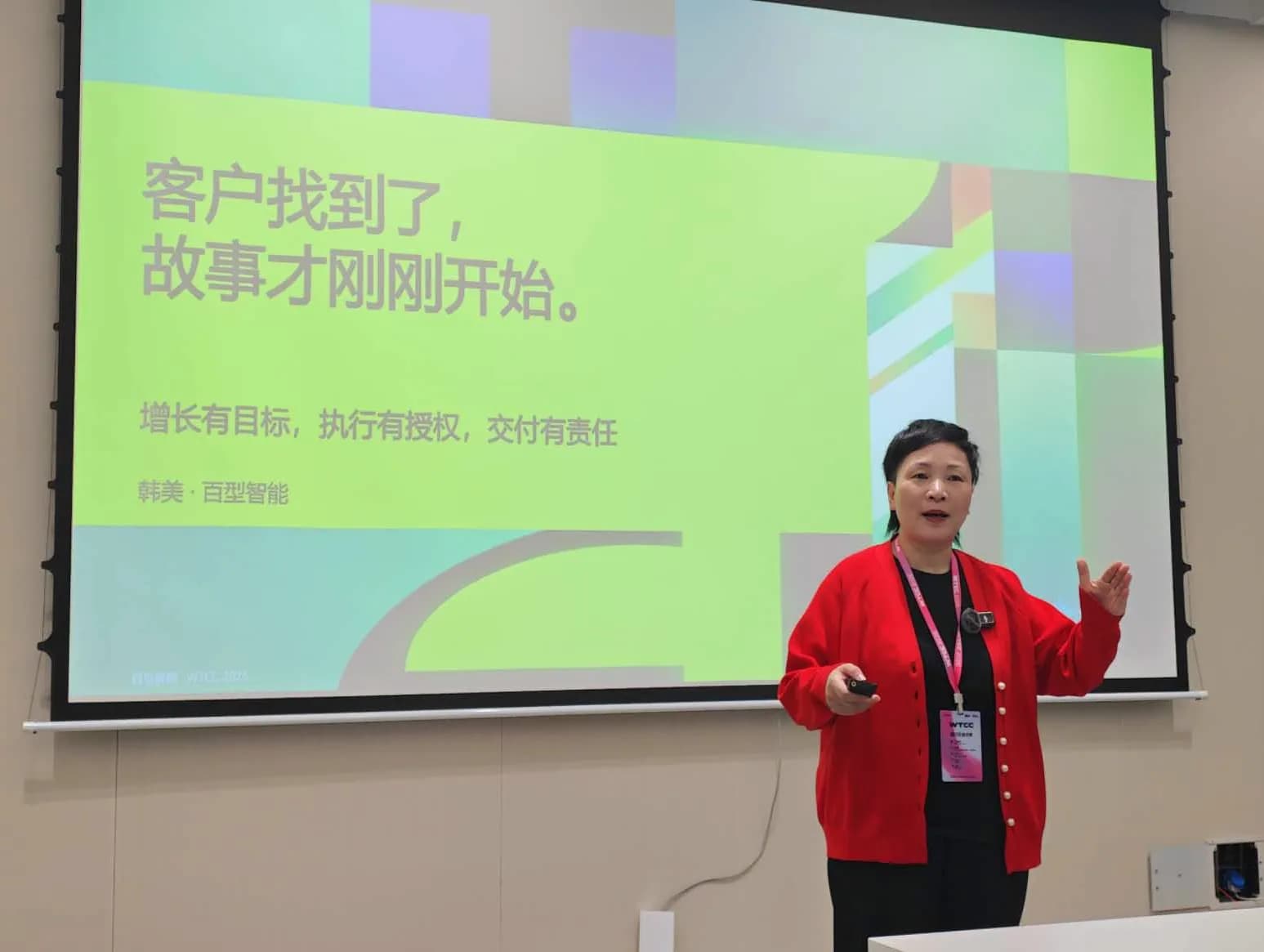
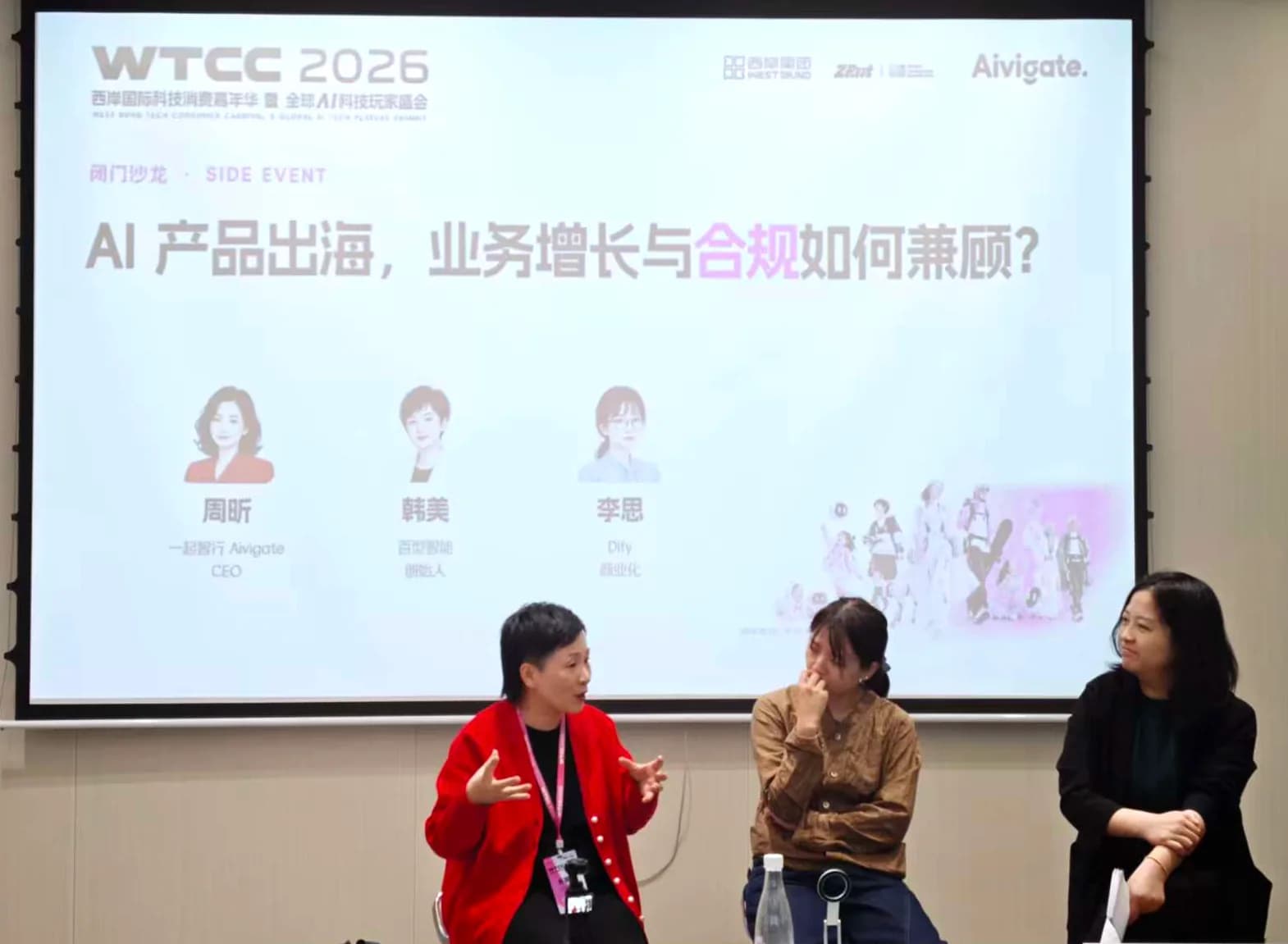
On October 24, during WTCC 2026 West Bund International Tech Consumer Carnival and Global AI Tech Players Gathering, Baixyn founder and CEO Han Mei was invited to a closed-door salon to discuss 'AI products going global: How to balance business growth and compliance?'
Drawing on years of experience in business management and two real customer cases, Han Mei focused on how AI can discover new overseas market opportunities, support customer segmentation and human-AI collaboration, and further explored long-chain business execution and outcome delivery for enterprise AI.
Discovering new buyers and expanding market understanding
In her talk, Han Mei used an air purification technology company as an example to explain how AI helps companies expand overseas markets.
The company had previously used Google ads to acquire customers, but the leads did not match its business needs well. As its product application scenarios expanded, the company needed to understand which markets had demand and which buyers were suitable to develop.
With Baixyn AI, the company found a potential distributor in the Maldives. The market, known for tourism, was not an obvious direction for the team. After learning more about local demand, the company partnered with the local distributor and won orders.
The experience showed the team that beyond familiar markets, there may be business opportunities that match the product. Judging whether a market is worth developing requires looking at how the product is actually used and understanding local application scenarios and buyer needs.
As its overseas distributor network expanded, the company also began encouraging distributors to use Baixyn AI to develop local customers, applying AI to continuous customer expansion.
After inquiries increase, how to follow up by tier
The other company Han Mei shared, a digital printing business, faced a new problem after its customer base grew.
The company used AI for overseas customer acquisition, and inquiries gradually increased. With more potential customers, the sales team needed to decide which opportunities deserved priority and how to arrange follow-up for different customers.
The customer wanted to prioritize opportunities worth more than $100,000 per deal. Around this goal, the Baixyn team further refined customer screening criteria, using AI for screening, company background research, and demand analysis, before sales staff carried out priority follow-up.
For smaller opportunities, the company is also exploring how to let AI learn from top salespeople and assist with customer reception and follow-up, helping the team address different customer needs.
This case moved the discussion from continuous customer acquisition to customer segmentation. As new opportunities arrive, companies need to combine their products, business goals, and team resources to define follow-up priorities and arrange appropriate service approaches for different customers.
Enterprise brain-driven multi-agent collaboration
The two cases involve business needs at different stages, but they share a common requirement: AI must understand the company's own business to provide useful support for subsequent work.
Baixyn's OntoZ uses an 'enterprise ontology + multi-agent' technology system. It builds an enterprise brain around enterprise ontology, organizing the company's products, customers, and business experience into interconnected information to give AI a basis for understanding the business.
In customer acquisition, tasks such as customer discovery, background analysis, and communication support need to revolve around the same business goal and connect through the company's product characteristics and customer screening criteria. The enterprise brain provides the business basis for these tasks, multiple agents divide the work, and business staff take part in key judgments and follow-up communication.
Take customer segmentation as an example. The team first defines which opportunities deserve priority; AI then helps organize information and analyze customers; business staff arrange follow-up based on actual conditions. Feedback from communication also helps the company improve its understanding of target customers and adjust its future development direction.
Bringing enterprise experience into AI's work and continuously testing those judgments in real business is an important foundation for human-AI collaboration.
Advancing outcome delivery along business goals
From finding a potential buyer to understanding needs, preparing communication, and advancing cooperation, a deal often crosses multiple stages. Whether information from one step can support the next affects whether the whole business process can keep moving forward.
The talk also extended to long-chain business execution for enterprise AI: how AI can take on interconnected tasks around a business goal and collaborate with business staff when judgment, verification, or communication is needed.
From an outcome-delivery perspective, companies need to clarify the requirements of each stage. Organizing customer information, identifying opportunities worth pursuing, obtaining inquiries, and reaching cooperation represent different stages of business progress, each requiring appropriate evaluation criteria. How far a task has progressed and what issues remain also need clear feedback.
Building on its existing customer acquisition practice, Baixyn is further exploring how to let the enterprise brain drive multi-agent collaboration, support longer business tasks, and validate task execution and outcome delivery in specific scenarios.
From discovering new overseas buyers to defining follow-up priorities for growing inquiries, the two companies' practices show different stages of AI's participation in going-global business and provide a concrete basis for discussing how AI can participate more deeply in daily operations.